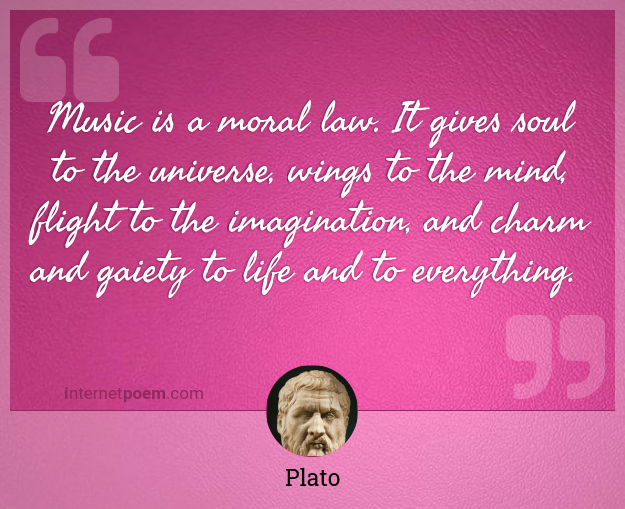
Music is a real passion of mine and this quote from Plato absolutely resonates with me. I have been singing for as long as I can remember and I have been playing the clarinet for around 50 years. I still play in a local orchestra as well as playing piano at my church and my degree is in music too. Music has completely shaped the person I am today. No surprise then as to where my passion comes from! However, I am also passionate that everyone has the opportunity to experience the joys and benefits that music can bring and schools have a crucial role to play in this.
Music is all around us everyday whether this be through the radio, TV, concerts or even singing in the shower! It is a universal language and it has the power inspire our creativity, invoke feelings and memories and help to calm us in difficult situations. The great thing is that we don’t need to be expert musicians to enjoy the benefits of music as hopefully you will see.
There has been much research into the benefits of music and this is well-documented, but I would like to draw your attention to 10 things schools should know about teaching music from Music Mark – The UK Association for Music Education.

- Music boosts school improvement
Research as well as anecdotal evidence have found clear links between music and outcomes in literacy and mathematics. A music-rich curriculum has been found to be able to boost pupil attainment and also pupil attendance. Music Marks cites Dallow Primary in Luton which moved from an Ofsted Special Measures category to Outstanding by introducing more music into the curriculum. Feversham Primary School in Bradford also had the same experience. Their music coordinator said that they tried doing more English and Mathematics to try to raise standards, but this didn’t work. It was only when they introduced more music across the curriculum that the results started to improve, enabling the school to be rated Outstanding in 2019. It’s obviously not just all about Ofsted judgements, but these schools also reported other important benefits like improved pupil self-confidence as well as boosting pupil and staff moral and a sense of community. - Music improves learning skills
Music helps pupils to develop key skills to help them in all aspects of their learning for example self and social awareness, improved concentration and attention and self-discipline. - Music fosters team working
Most of the activities in a music lesson are collaborative with pupils working in pairs or small groups. It is important that they learn to work together well to produce the most satisfying result they can. Group work like this also encourages taking turns and negotiating on ideas being chosen as well as how to handle their own ideas not being chosen. - Music builds life skills
Some of these have already been mentioned like team work, cooperation, listening etc, but music also helps to develop empathy, problem solving, communication and a sense of responsibility. - Music underpins better behaviour
Music is a very disciplined subject. If you have a class of children all playing an instrument of some sort, then you need to have clear class boundaries! Music Marks cites a research project called Exchanging Notes (Kinsella, Fautley & Whittaker 2019) which found pleasing results, particularly for the social outcomes of pupils at risk of exclusion from school. This led to them feeling a greater sense of identity and improved their motivation and behaviour. - Music encourages creativity
This may appear an obvious statement as music is a creative subject. However, it goes beyond music creativity. Music, particularly composition, helps children to think outside the box and to be creative and resourceful, which in turn helps their problem-solving capabilities. - Music is for life
Not everyone will become a professional musician but everyone experiences music throughout their lives and it is important that this starts as early as possible. Music can trigger emotions and memories and can provide amazing experiences like attending gigs, concerts and shows. It will be a part of our highest points and most significant events as well as some of our lowest. - Music is an educational building block
The DfE have recognised the importance of music in developing all of the skills mentioned above (see their Model Music Curriculum resource mentioned below) and so it is important that all children start from a level playing field and that we, as teachers, offer experiences that children would not ordinarily be able to access at home or outside of school. - Music is fun
I don’t think any of us would argue with this statement. The thrill of performing with others at whatever level or attending concerts and shows cannot be over-stated in my opinion. Music has the ability to lift the spirits and calm the soul. - Music is for everyone
No-one need be excluded from the amazing gift of music. It is a subject that includes everyone and benefits everyone.

Specialist Teacher vs Non-Specialist Teacher
Many schools have gone down this route and I think it is great to have a specialist music teacher as this means that a high-quality music education is possible for all children. I fulfilled this role myself for a number of years before returning full time to the classroom. However, music is an amazing subject for linking to many areas of the curriculum and can be used to improve outcomes in these subjects. So, if it is simply left to one lesson per week taught by a specialist, however good that lesson is, these opportunities are being missed. In the academic year 2018-2019, the Education Endowment Foundation (EEF) funded a project in Teeside called First Thing Music. This focused on working with non-specialist Year 1 teachers to improve their confidence in teaching music, mainly through singing. The teachers involved found that their own confidence and subject knowledge improved and they were able to use much of what they had learnt in lessons other than music as well. This, in turn, had improved outcomes both academically and socially for the pupils too. You can read more about this project and some of the comments from teachers by following this link. First Thing Music.
So, if your school employs a specialist teacher, please can I encourage you to talk to them about how you can incorporate more music into your other lessons. Don’t just leave it to them!
Some useful resources if you are a non-specialist or a specialist music teacher

DfE Model Music Curriculum: This is an amazing resource and was released in March 2021. It offers great non-statutory guidance for teaching music in Primary Schools (and KS3) and includes lots of suggestions year-by-year for resources to sing and listen to as well as a very detailed glossary. I highly recommend it! You can find all the resources here.

BBC Bring the Noise: This website contains lots of ideas and activities as well as information and tips for teachers.

BBC 10 Pieces: There are now 40 pieces! Again, this is a great resource. There are videos of performances, information about the composers and lesson plans too.
There are other resources out there as well including schemes but the resources above are freely available and are great for specialist and non-specialist teachers alike.
Hopefully, this blog has enabled you to see that you don’t need to be a music expert to be able to use music in your teaching or even teach music yourself. We are all born with a body and a voice, so let’s get using them with our children!
Marie Bateman, SCITT Session Tutor